

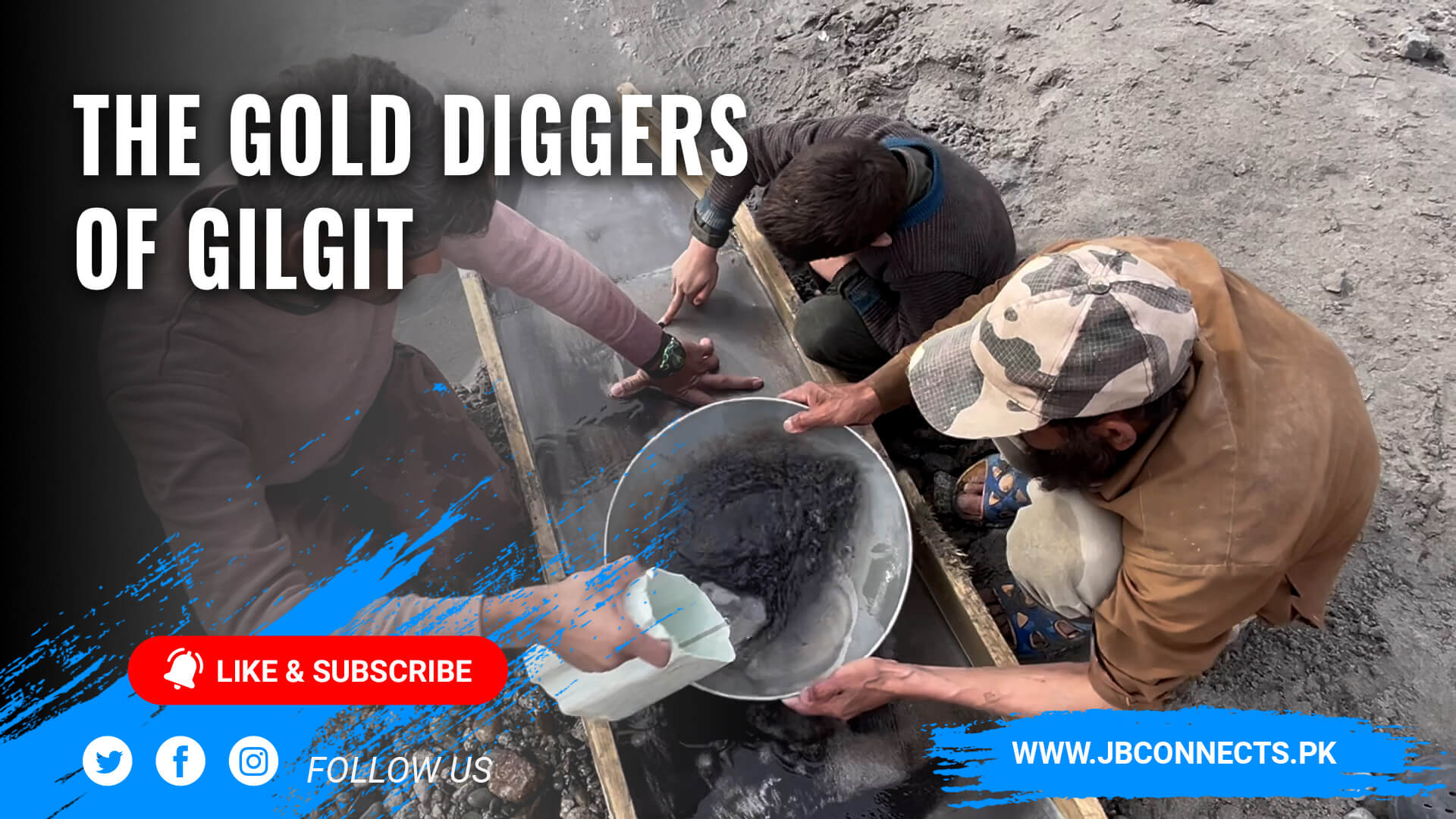
The Indus River is not only the lifeline of those who live around it, but it also spills gold from the earth of the river bed. That has become the source of livelihood for generations of families in Gilgit Baltistan, who excavate gold and sell it to gold buyers in the market.
Set against the majestic backdrop of Baltistan’s mountains, families have practiced this rare and timeworn craft, working from dawn until dusk in freezing waters and under harsh sun to extract gold worth
thousands of rupees. Using handmade wooden tools and a sieve, they sift through the sand, separating black sediment and gold by hand. Their lives are steeped in simplicity, but their work sustains not just livelihoods it keeps an ancient tradition alive.
This labor is driven as much by heritage as by necessity. Many lack access to education, and don’t even consider it necessary to earn a living. Instead, so long as the Indus River spills gold, it is enough to keep them in the family trade.
Known locally by terms like maro or khayi, this form of artisanal gold ferreting spans across rivers in Gilgit and Baltistan from the Indus to Shyok, Hunza, and Ghizer. Though limited to a small scale today, experts point to its historical significance and untapped potential. With proper investment, these riverine gold reserves could one day uplift the region’s economy but for now, the quiet struggle of these hidden miners flows on with the river.