

The Karachi Arts Council recently organized a month-long festival that breathed new life into the dwindling world of performing arts.
The Sept through October festival featured eight theatre groups, including from overseas, uniting hundreds of performers in a celebration of the essence of theatre.
The history of theatre in Pakistan runs deeper and richer than one might expect.
“Pakistan’s history may only date back 76 years, but the history of theatre in this region is thousands of years old,” said Shahid Nadeem, director of Ajoka Theatre.
Archaeological discoveries, such as the ‘wise man’ or ‘King Priest’ and the ‘Dancing Girl,’ found from the ruins of Moen-jo-daro and Harappa civilizations provide evidence of performing arts spanning 5,000 to 7,000 years, he pointed out.
However, the journey of theatre in Pakistan has faced many challenges over the years.
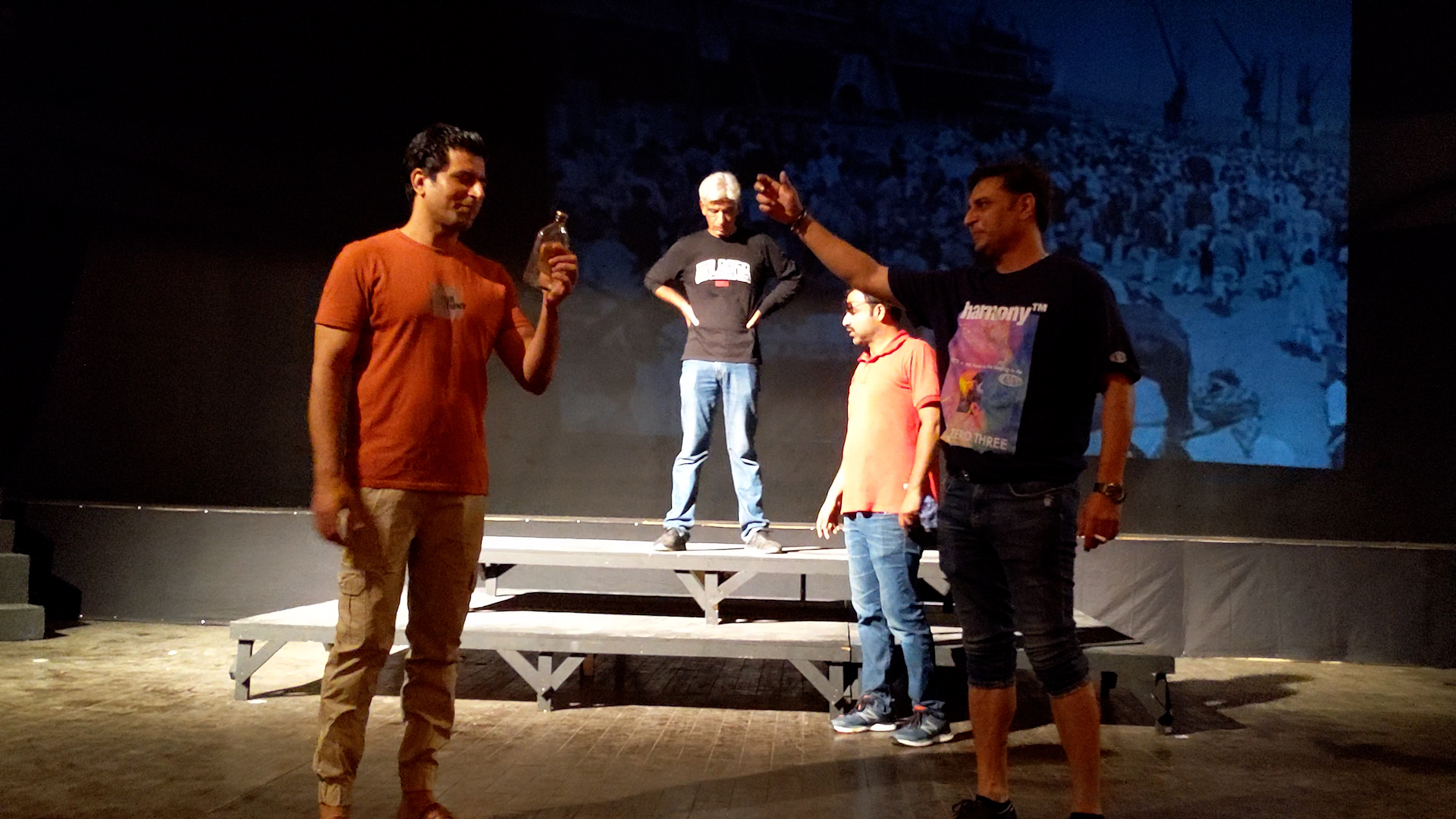
Shahnawaz Bhatti, writer and director, says that after partition, many talented performers migrated to India, thus weakening the theatre scene in Pakistan.
Despite these setbacks, he notes that the early ’70s to the ’80s marked a significant period of growth and
Usman Raj, a theatre, and film actor has seen a revival of sorts in recent years.
“Theatre is performed in every language in Pakistan, but in many places, it hasn’t thrived as it should,” he says.
“Festivals like this one bring local actors to the forefront and showcase the diversity of their performances. Theatre has its unique language, free from limitations.”
Uzma Hassan, a female actor with experience in theatre, film, and TV, draws attention to the challenges facing women artistes.
“Being an actor, and particularly a female actor, remains taboo. Acceptance for women performers is still lacking. Until this barrier is overcome, theatre cannot truly flourish.”
These two actors recently performed in the theatre festival, and afterwards spoke about their passion for the medium.
“Theatre is the medium of actors,” said Uzma. “It’s just you and the audience on stage, no directors.”
“The instant response from the audience can be addictive,” she added.
For Usman, theatre leaves the performer with enhanced body language, confidence, and mobility, which he says also benefits actors in films.
“Television focuses on the upper half of your body, mainly expressions and your eyes. Theatre broadens your range,” he explains.
Shahid Nadeem remains optimistic about the revival of theatre in Pakistan.
He believes that in this transformational era of digital communication, theatre adds too freedom of expression.
Moreover, he draws a sharp contrast between individual experiences of viewing events on the electronic media or even holding meetings on Zoom versus the communal aspect of sharing identity, language and human expressions in a theatre.