

Shaukat Korai
Among the biggest digital success stories in Pakistan is the switch from hailing taxis and rickshaws on the streets, to getting online and bidding for the cheapest driver.
It has turned traditional cab drivers, and customers bargaining with drivers on street corners, into a rare sight.
Nowadays, traditional cabbies are only visible sitting in worn out taxis outside railway stations and airports.
One big reason why they no longer attract customers is their price.
A taxi driver from the bygone era, Gul Akbar, explains why he charges more than digital drivers.
He argues that unlike online drivers, who never have to worry about passengers, he is unlikely to get a passenger after dropping one off.
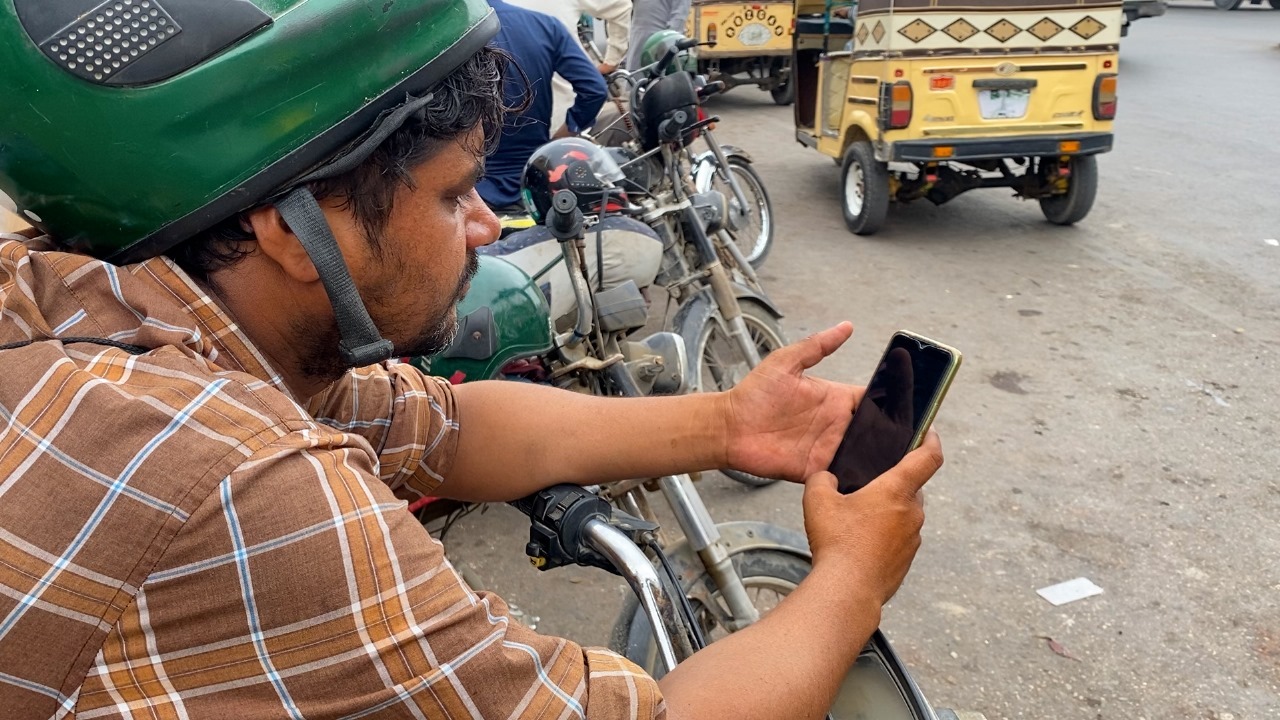
Mehtab Ahmed, who made the switch from old era driving to the digital age, says a while ago he too drove around hunting for passengers – while they hunted for drivers.
Now, he says it doesn’t matter where he is. At home, at a favorite location or wherever. The moment someone goes online, he heads out to them.
The digital era has helped citizens override the nightmare of public transport in Pakistan, says a customer, Javed Saba.
He says that apps can now be used to download mainstream digital transporters.
Among these transport systems are InDrive, Bykea, Careem and Uber.
Uber bought Careem in 2019.
Digital transport has also helped women.
Naghma Sheikh is one person who cites public transportation as one of the biggest problems of Karachi, with online transport providing some form of relief.
In particular, she says it has helped working women reach their offices with a sense of safety.
InDrive service has recently captured a sizeable share of the digital transport market by engaging in competitive policies.
A representative of InDrive, Adnan Ahmed claims his company has fixed riding charges, which are acquired after customers bargain with the driver online.
He also says there is no waiting charge.
“Our commission on cars is 12%, 10% on motor bikes and 12% on auto rickshaws. We have just started a freight service, including transporting cars.”
Naghma Sheikh cautions women against switching off their apps, based on the insistence of some drivers.
The InDrive representative too agrees that digital transport companies bear no responsibility after a customer switches off the app.
Customer Javed Saba says that young people – students who want to earn money for education, and a growing number of laborers and rickshaw drivers are becoming drivers for online companies.
He finds they earn enough to supplement their household needs.
