

In a captivating narrative of Karachi’s past, prominent figures from diverse communities come together to recount the city’s pre-partition era.
Ghazi Salahuddin, esteemed journalist and writer, fondly recalls Karachi’s origins as a small, enchanting and prosperous city, replete with cleanliness and civility.
Delving into the city’s historical architecture, human rights activist Rochi Ram unveils the tale of Bhoju Mal, father of Nao Mal, who erected an impressive fort. This fort, graced by the Khara Dar and Metha Dar gates, became a beacon of light for migrants from Baluchistan. The journey of these pioneers can be traced from African and Arab countries to Baluchistan, where they found a new home in the fort’s protective embrace.
Historian Rumana Hussain guides us through the corridors of time, unveiling the educational and medical institutions that adorned old Karachi. Schools like BVS School for Boys and Mama Parsi School for Girls, alongside medical institutions like Edulji Dinshaw Dispensary, sprung up, thanks to the Parsi community.
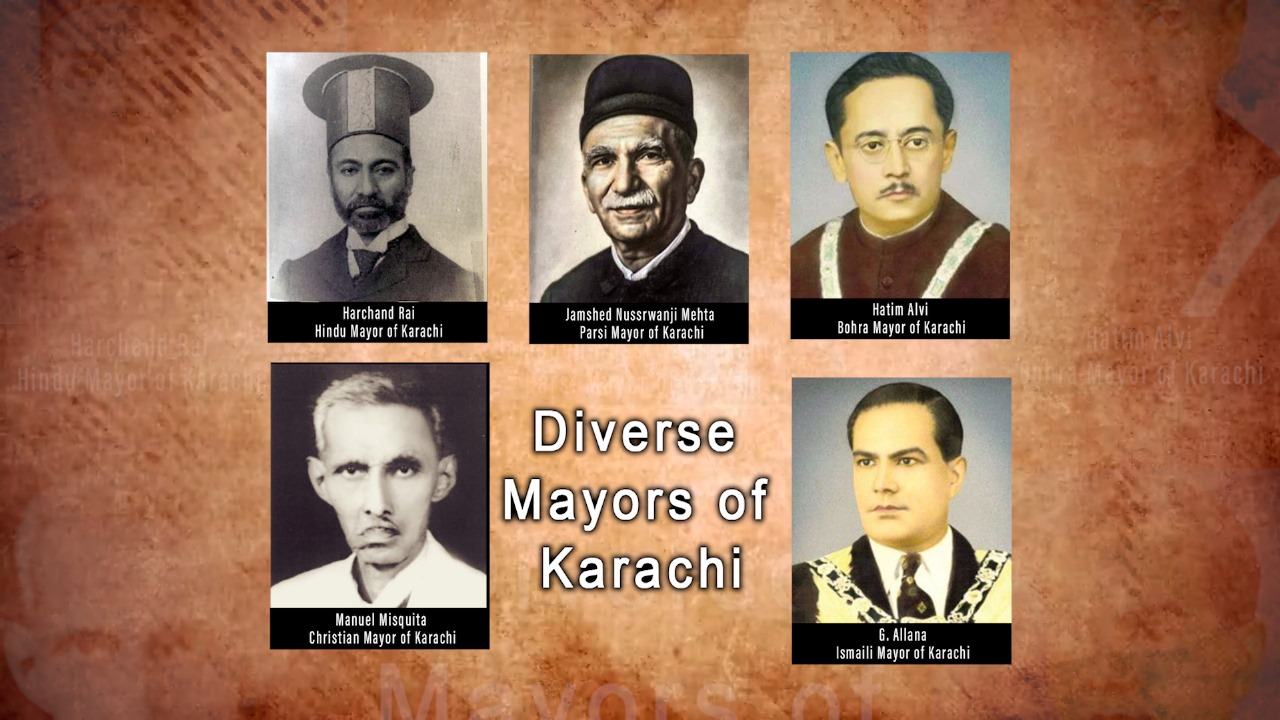
A tapestry of cultures and faiths is masterfully woven by Father Bonnie Fernandez, who represents the Christian community. He narrates how the Catholic Church, heeding Quaid-i-Azam Mohammed Ali Jinnah’s call for unity, made invaluable contributions to the city’s growth. The Christian community’s influence extended to the corridors of power, with Mayor Manuel Mesquita proudly representing their interests in 1946.
The Ismaili community’s imprint on Karachi’s development is illuminated by former senator Karim Khawaja. Post partition mayor of Karachi, G. Allana left a mark on the city’s landscape. His wife was a trail blazing member of the Sindh Assembly. Maternity homes, schools, libraries, and even the iconic Habib Bank stand as testaments to the Khoja community’s entrepreneurial spirit.
The peaceful co-existence of Karachi’s Muslims and non-Muslims resulted in respect for all communities and their respective faiths. It resonated within the walls of the Theosophical Society with its motto “There is no religion higher than truth.” The society held its meetings in the Jamshed Memorial Hall, named after Karachi’s first Parsee Mayor, Jamshed Nusserwanjee.
Theosophical Society’s honorary secretary general, Mushtaq H. Jindani recalls how lectures and plays were held in the Jamshed Nusserwanjee Hall, and this institution came to epitomize Karachi’s pluralistic essence.
Karachi’s heritage stands as a testament to the collaborative efforts of its myriad communities. From the institutions created by the Hindu middle class to the Parsis architectural structures, the Christian community’s investment in education… as well as the Memon, Bohra and Ismaili community’s enterprising contributions, Karachi’s past shines as a radiant beacon of unity in diversity.
This journey through time underscores the collective role played by every community in nurturing the mega city- Karachi, we know and cherish today.
