

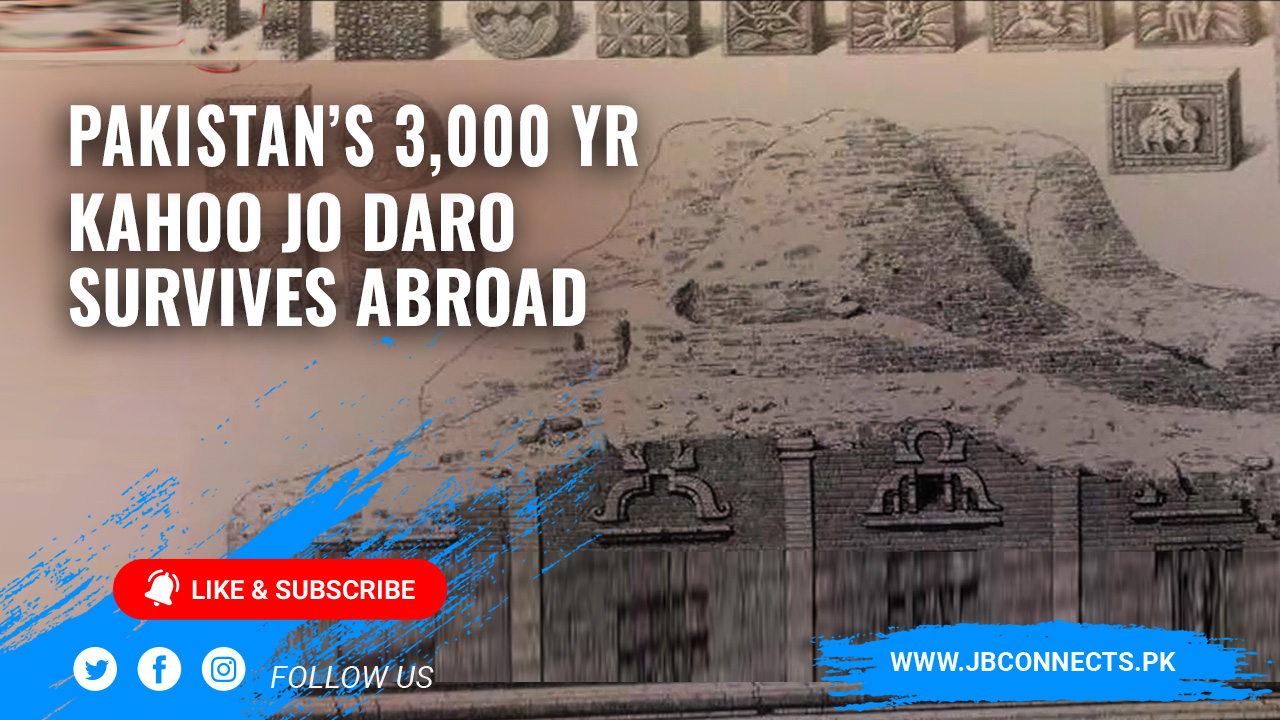
Kahu jo Daro was once a thriving centre of civilisation dating back 2,500 -3,000 years. Historical records confirm that when Buddhism flourished across the subcontinent, Kahu Jo Daro stood as a major religious and cultural hub. Today, however, nothing remains except reddish earth and dust with no marker to indicate that a grand Buddhist stupa once dominated the site.
The importance of Kahu Jo Daro came to light during the British era, when railway construction began in 1857. British officeJ John Jacob identified the ancient mound, followed by excavations in the 19th and 20th centuries. Their discoveries were extraordinary: statues of Gautam Buddha sculptures, decorated bricks, walls, pottery, rare paintings, and a gold leaf vial believed to contain Buddha’s ashes similar to relics found at Mohenjo-Daro.
Around twelve Buddha statues were recovered from the site, all depicting the Buddha in a seated position, including one rare full-length figure. Yet almost none of these artefacts remain in Sindh. Experts estimate that nearly 250 sculptures and relics were removed and taken to Bombay. Today, these treasures are preserved in India’s Chhatrapati Shivaji Maharaj Museum and Britain’s Victoria and Albert Museum.
