

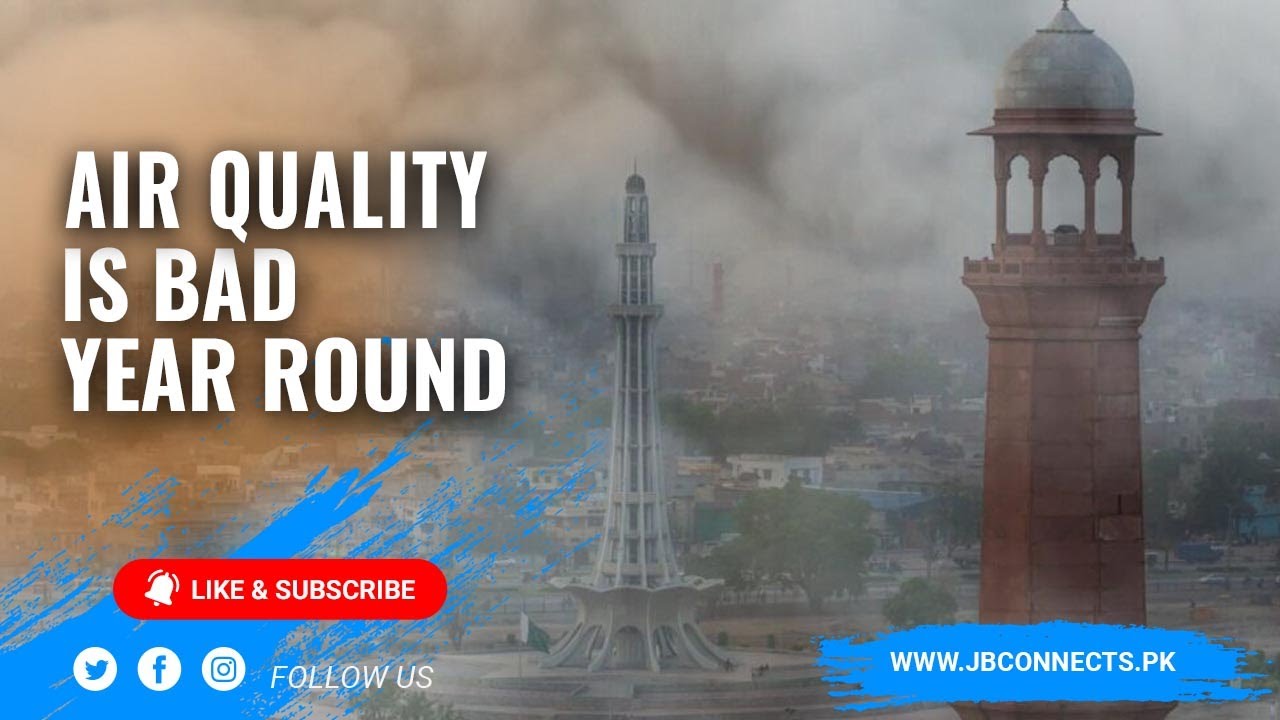
Karachi and Lahore, densely populated cities, have gained notoriety due to their severe air pollution crisis.
Recent reports indicate that both cities are among the worst affected by air pollution, resulting in various health issues and a significant reduction in the average life expectancy of their residents by approximately 3-4 years.
Former General Secretary of the Pakistan Medical Association (PMA), Dr Qaiser Sajjad highlights the hidden dangers of air pollution, describing it as a slow poison for human beings.
“Despite being invisible, polluted air poses a grave threat to our health. Inhaling contaminated air can result in respiratory conditions such as bronchitis and laryngitis, causing inflammation of the throat, vocal damage, and breathing difficulties.”
Furthermore, air pollution is closely associated with serious illnesses like lung cancer and bronchial carcinoma.
It also contributes to the development of other ailments, including pharyngitis, sinusitis, and bronchial asthma.
The harmful impacts of air pollution extend beyond the respiratory system, affecting the skin, eyes, and in severe cases, leading to fatalities.
Director of Climate Action, Muhammad Yaser emphasizes the dire consequences of polluted air quality, which significantly reduces the average lifespan of citizens.
Karachi experiences a decrease of 3 years in life expectancy, while Lahore suffers a staggering decrease of 7 ½ years and Islamabad faces a decrease of 4 years.
When we breathe in polluted air, tiny particles enter our bloodstream, affecting every organ in our body. Our skin, eardrums, throat, and eyes, which act as the first line of defense, also suffer from the adverse effects, resulting in the development of various diseases.
Yaser further explains that transportation is the primary contributor to pollution in Karachi, with 60 percent of emissions originating from this sector.
Similarly, a recent study conducted in Lahore reveals that transportation accounts for a significant 80 percent of the city’s pollution.
Besides transportation, Lahore is burdened with pollution from other sources such as agriculture and brick kilns.
Weather conditions, particularly fog, worsen the situation as smoke particles combine with fog, intensifying their harmful effects.
Power plants and industries across Pakistan also make substantial contribution to the escalating pollution levels. These sources, including transportation, power plants, and factories, are the primary culprits behind the country’s air pollution crisis.
Director of the Sindh Environmental Protection Agency (SEPA) Sada Bux Dars emphasizes the urgent need for a unified policy among key departments such as transport, traffic police, excise, and environment.
The absence of such a policy is a critical issue that requires immediate attention. SEPA has, In collaboration with the traffic police, conducted scientific inspections of vehicles emitting smoke. Vehicles failing to meet the required standards are flagged as non-compliant and fined.
The Director of Climate Action further suggests that a technological shift towards accessible electric technology is crucial to effectively combat air pollution.
He compares it to charging a mobile phone battery, emphasizing the need for widespread adoption of electric vehicles and other clean technologies.
Such a shift would help reduce emissions and mitigate the air pollution crisis, he says.
