

In the bustling city of Quetta, with its 2 1/2 million residents, 45-year-old old Zara Bibi stands out as an unusual character. Zara is the only woman in Quetta who first drove a rickshaw, and now a van in which she provides pick and drop service to children.
“Initially, I picked and dropped children in a rickshaw, and now with Allah’s blessings, I have this vehicle, which I use to transport children,” she said in an interview to JBConnects.” Zara married in Lahore. But in the first year of marriage, she was sent packing for no fault of her own.
“After my daughter was born, my in-laws had an issue with my having a daughter. Things developed to a point, where they left me and my daughter without support,” she narrated.
Driven out by her in-laws, she set up a small shop to support herself and her daughter. Zara says that in the course of work in Quetta, she encountered many kinds of people.
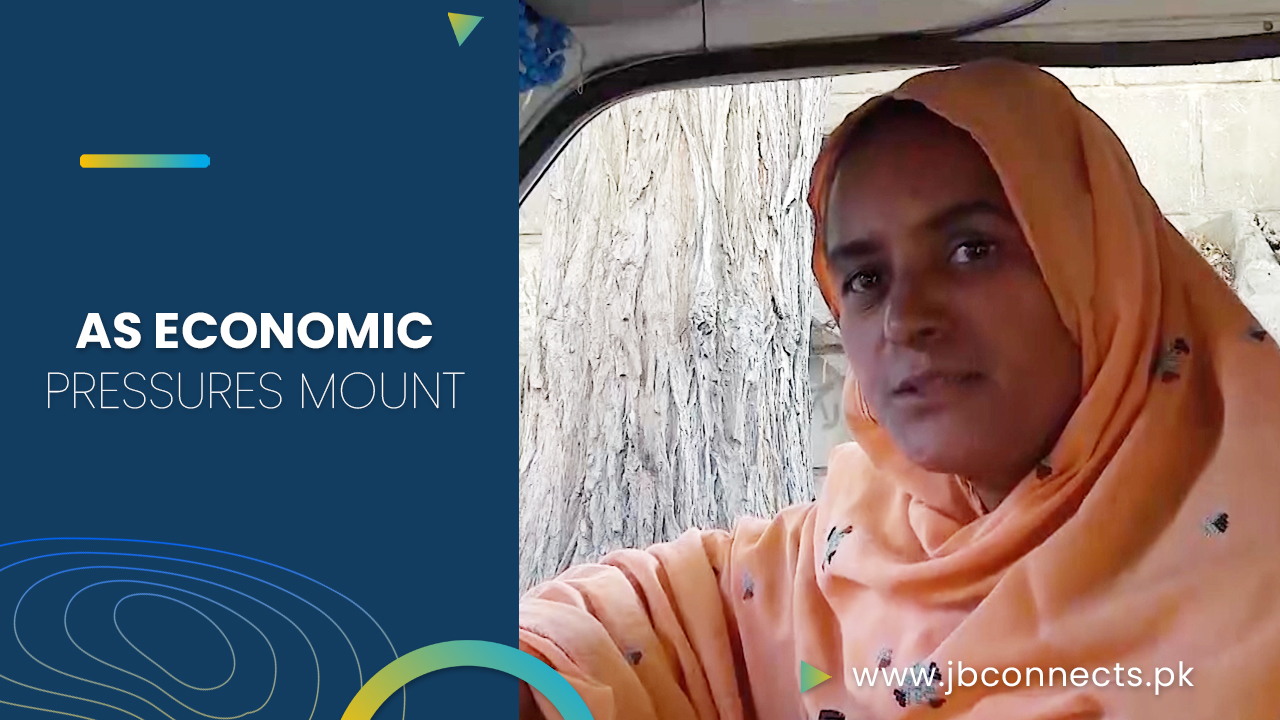
But despite encountering discouragement, they could not break her will. “You do encounter nasty people, who try to discourage you. But I stayed firm,” she said.
Quetta rickshaw driver Sher Ali says that tribal customs frown on women drivers. “We consider it bad because it unveils the woman. And then as a driver she is even further exposed.”
But those working for women’s emancipation praise the step taken by Zara Bibi.
Director Aurat Foundation, Allauddin Khilji says the praise is for women who make the effort. “We have merely acknowledged their struggles and told people what their efforts have been.”
“Zara began her work journey from a small shop, then a rickshaw – and now she drives a van. We want her to redouble her efforts. She should have her own vehicles, or a good business of her own.”
According to a 2023 World Bank report, over 78% women in Quetta are engaged in non-traditional work from their home bases. Social rights activists say that if women’s non-traditional labor is organized, it can make them economically independent.
