

Harnessing Ice Stupas:
A Promising Solution to Water Scarcity in Gilgit Baltistan
In the beautiful region Gilgit Baltistan, where majestic mountains adorn the horizon, lies a hidden challenge that residents face every year – water scarcity.
As the locals grapple with this pressing issue, a remarkable solution has emerged: the innovative concept of ice stupas.
Ask any local about the biggest challenge they face, and the resounding answer will be water scarcity.
Haji Qurban, a dedicated social worker, emphasizes that the shortage becomes acute during April and May, crucial months for farming and sustenance. The conundrum arises from the dual demand for water – for agricultural purposes and drinking needs to combat this problem, the concept of artificial glaciers, pioneered by Indian engineer Sonam Wangchuk in 2013, gained traction.
These “ice stupas” mimic natural glaciers by diverting water to shady mountain sides, where it freezes into massive ice cones.
Residents in a village in Skardu district of Baltistan have embraced this innovative approach, transforming the landscape and replenishing water resources.
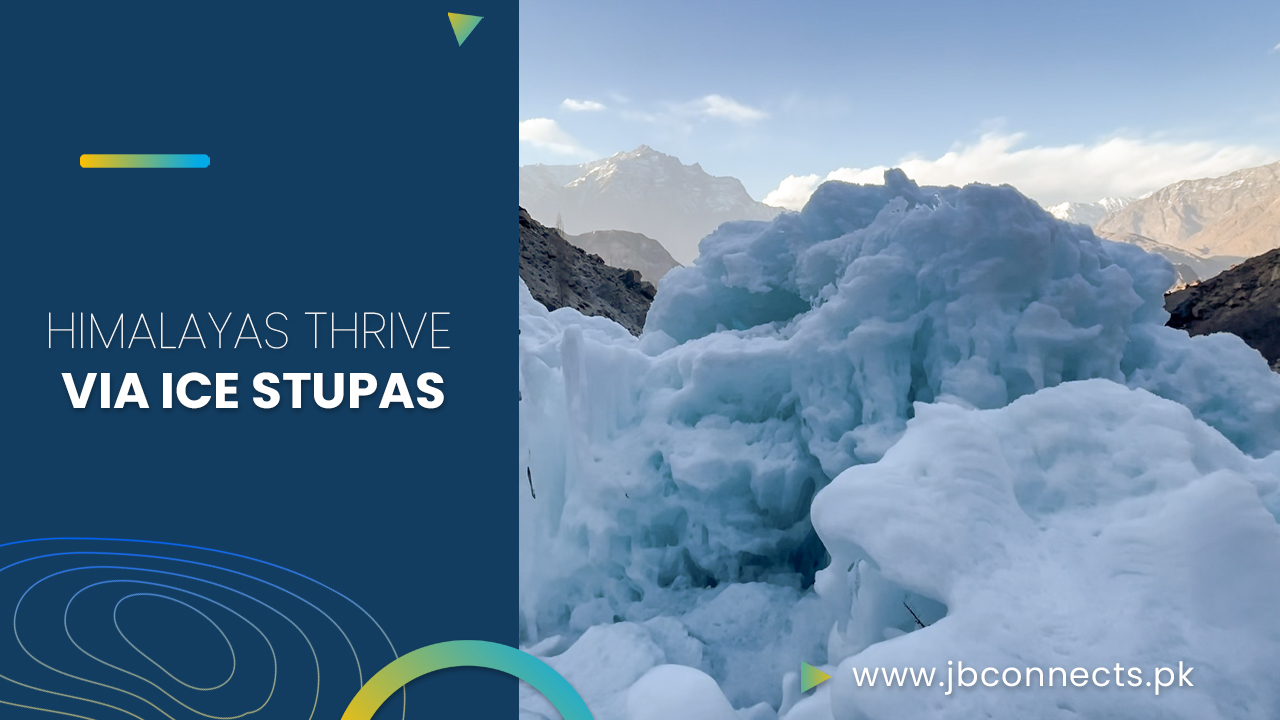
Muhammad Raza, an expert in artificial ice farming, spearheads the efforts to implement ice stupas. Inspired by similar endeavors in neighboring countries, Raza and his team have successfully constructed larger glaciers, storing millions of liters of water.
The ice stupas ensure a steady supply of water throughout the year, sustaining agriculture even in high elevations. Local farmers like Abuzar Ali attest to the transformative impact of ice stupas. With abundant water resources, previously barren lands have sprung to life, enabling cultivation and revitalizing livelihoods.
The once-dry terrains now yield bountiful crops, securing food security for the communities. While ice stupas offer a respite from immediate water scarcity, experts caution against relying solely on such short-term solutions.
Academic studies reveal alarming trends of glacier melt worldwide, highlighting the urgency of addressing climate change. Despite their efficacy, ice stupas serve as a temporary measure, emphasizing the need for sustainable, long-term solutions to water management.
